
Coming soon
The lock board
Knit Needlebed’s patterns on a Passap E6000 without its console. The lock’s cable plugs into the board, the board plugs into your computer, and Needlebed picks the needles for every row as you knit.
A$300 about US$210, plus postage
Not for sale yet. The date will be here when the first boards are.
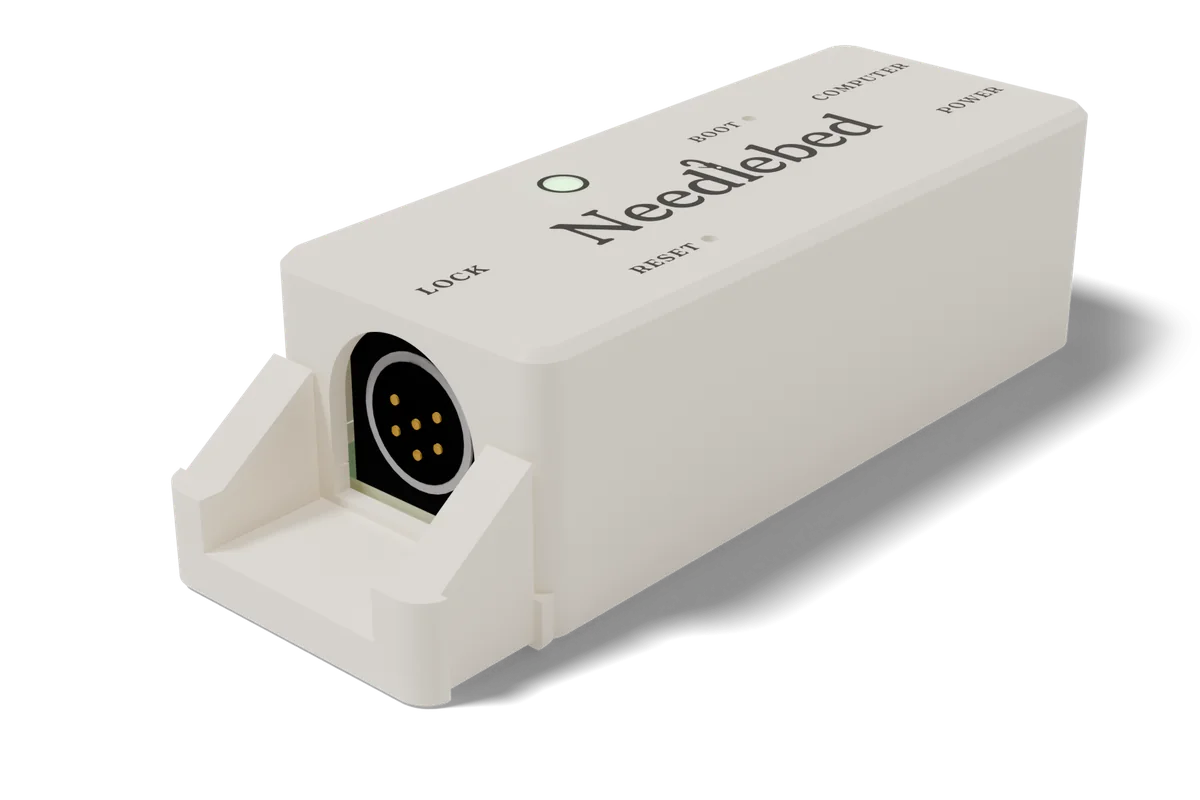
It takes the console’s place
The E6000’s console reads the lock’s sensors and tells it which needles to pick. The lock board does the same job, but takes its orders from Needlebed, so any picture you turn into a pattern can go straight to the machine.
- Lock
- The lock’s curly cable plugs into the round socket at one end, the same 6-pin DIN socket as the console’s.
- Computer
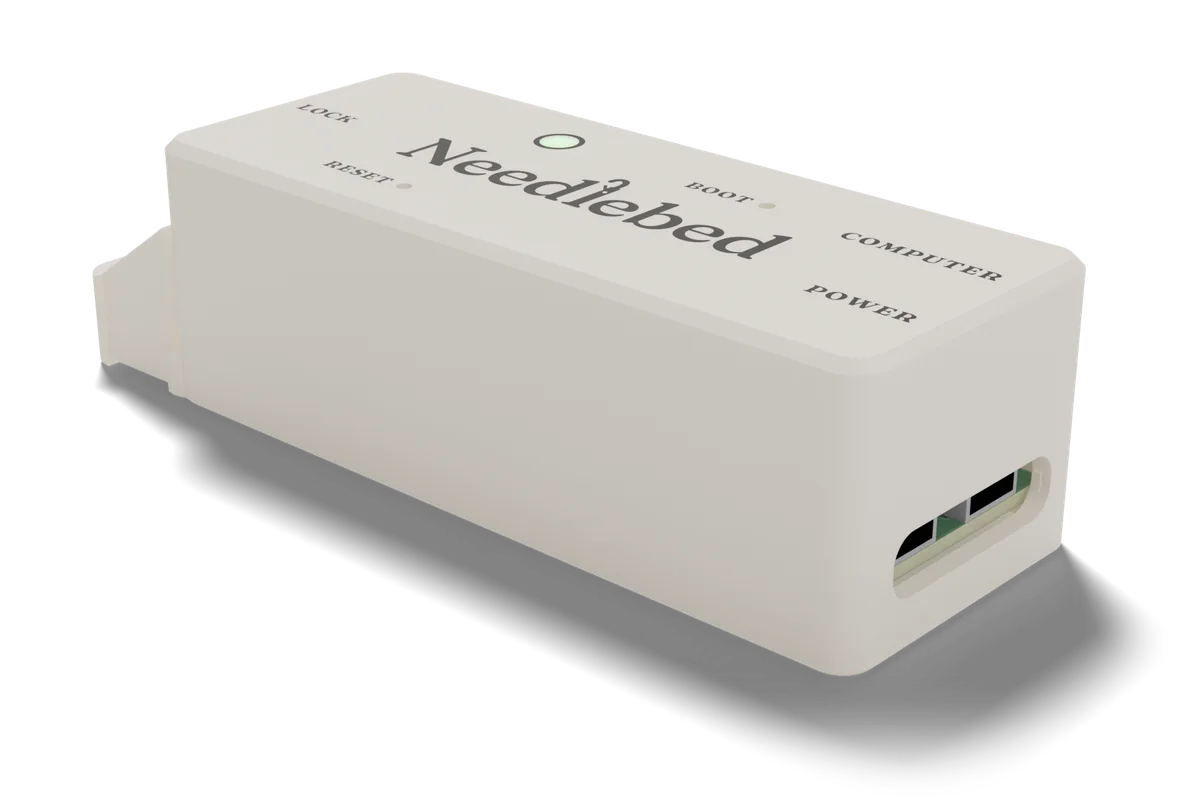
- At the other end: USB-C to the computer running Needlebed in Chrome or Edge.
- Power
- Beside it: USB-C from a charger of 30 W or more, which gives the lock its 15 V. A phone charger or a computer’s USB port can’t.
What’s inside
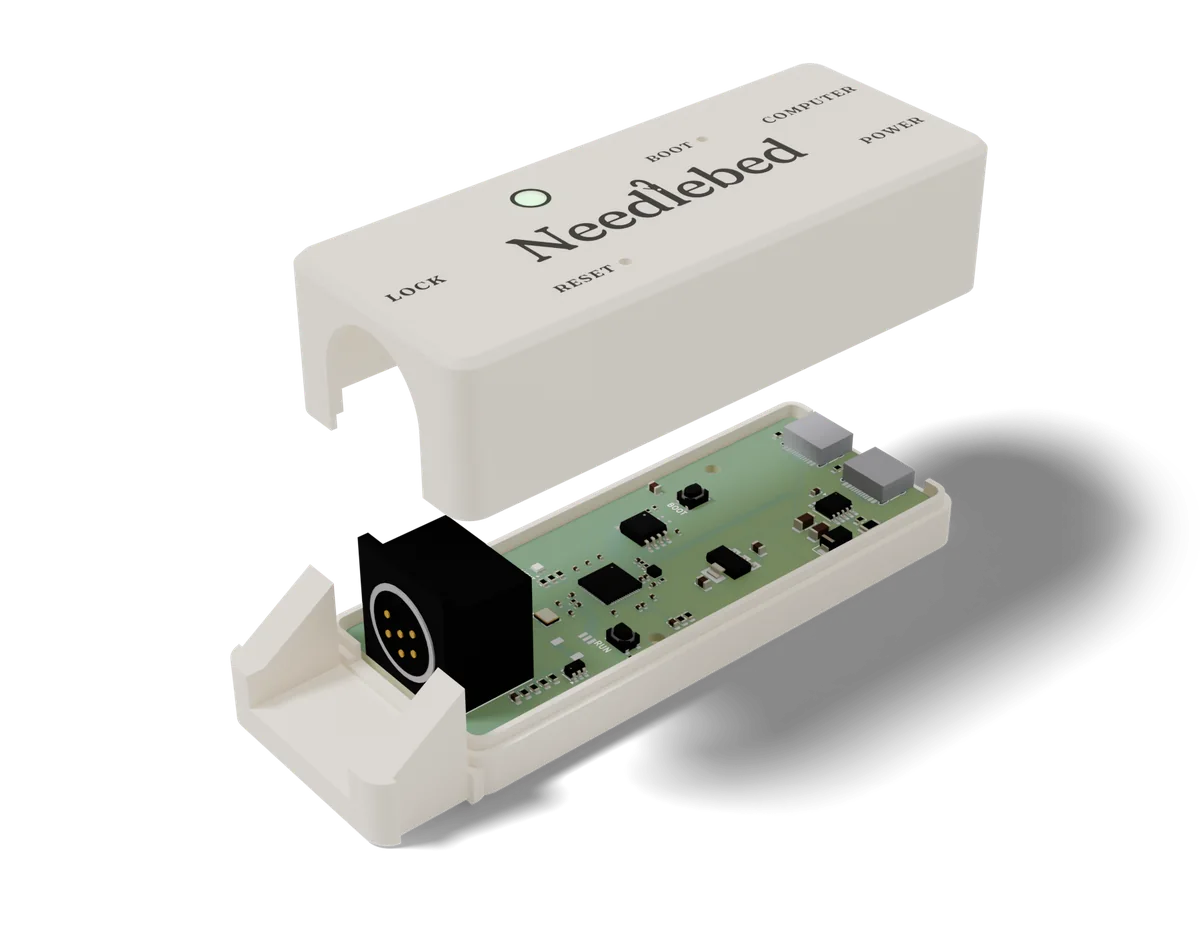
- An RP2350, the chip in the Raspberry Pi Pico 2, running Needlebed’s own firmware.
- The lock’s signals at the levels the console uses, through a socket made for the lock’s plug.
- A chip that asks the charger for 15 V, and a resettable fuse and a surge clamp on the lock’s power.
- It keeps an eye on the lock’s power, and Needlebed tells you if the charger isn’t giving enough.
The case
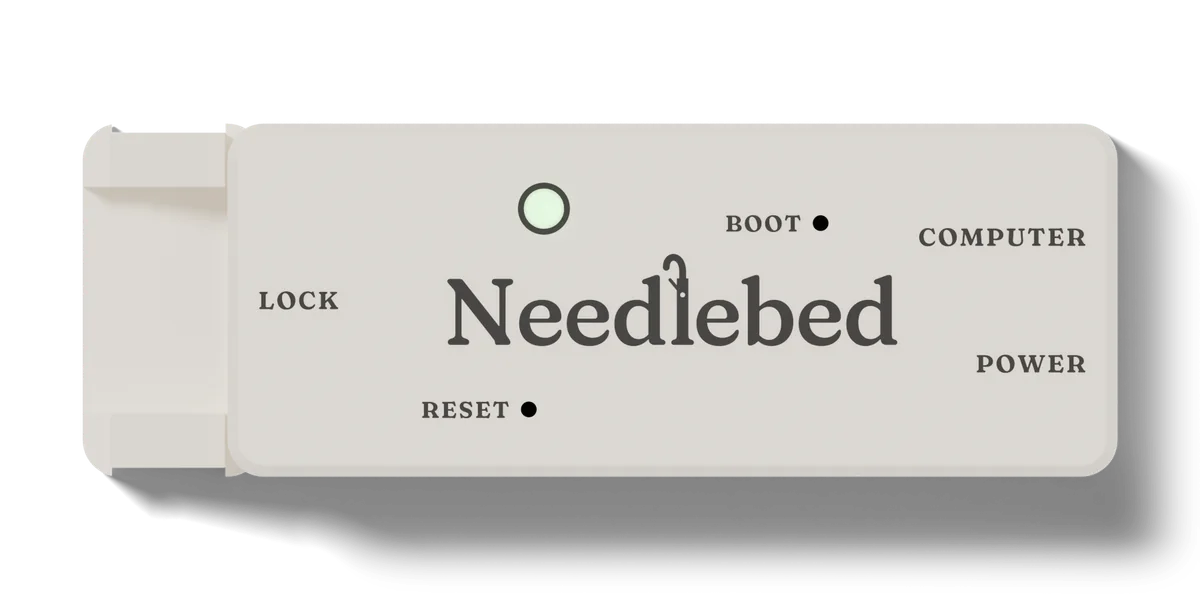
Printed in undyed PLA, with the name and the labels inlaid in black. It’s 114 × 39 × 32 mm, made to fit the board rather than the board made to fit a box.
- A porch for the lock’s plug. As the lock runs along the bed, its cable tugs. The porch’s sides keep the plug straight in its socket, and a strap over it, which comes with the board, keeps it in.
- A light on top, so you can keep your eyes on the machine: green when it’s ready to knit, flashing amber when a yarn change or an empty pass is next, red if the lock has no power.
- It stays put. Screw it to the machine’s stand or a bench through the two keyholes underneath, or stand it on the stick-on feet that come with it.
You’ll also need
- A Passap E6000 and its front lock.
- A USB-C charger of 30 W or more, with its cable. Most laptop chargers will do.
- A USB-C cable for the computer.
- A computer with Chrome or Edge, the browsers that can talk to USB devices.
Never plug the lock into the console and the board at the same time.
Where it’s up to
The board’s circuit is designed and its case is drawn. The first boards haven’t been made yet. They’ll go on sale here once they’ve knitted on a real E6000.
In the meantime, Needlebed’s simulator runs the whole knitting process with a pretend carriage.